Want to be in the loop?
subscribe to
our notification
Business News
APPAREL FIRMS WORRY ABOUT 2017 WAGE HIKE PLAN
Under the council’s plan which will be submitted to the Government for approval, the minimum monthly wage for region one would be adjusted up by VND250,000 next year to VND3.75 million. Meanwhile, the rises for regions two, three and four would be VND220,000, VND200,000 and VND180,000 respectively, taking the minimum wages for these regions up to VND3.32 million, VND2.9 million and VND2.58 million per month.
Asked by the Daily about the pay raise plan, Nguyen Dinh Ngo, director of Can Tho City-based Viet Thanh Garment Export Co Ltd, said textile-garment enterprises are grappling with a host of difficulties and desperately finding ways to cut costs.
The 2016 minimum wage spike of 12.4% has hit Tay Do Garment Company hard as the firm’s wage fund has fallen short of VND6 billion.
“The salary hike for next year would definitely make life more difficult for the company,” said deputy general director Nguyen Hau Giang.
According to Giang, while minimum wages go up, labor productivity does not. In other words, the performance of workers has not improved in line with wage hikes, and his company has to set aside an additional VND1 billion a month for the salary spike.
Giang noted that insurance payment and labor union fees would increase proportionally. As a result, though sales may inch up slightly, profit would skid.
Tay Do paid VND1.6 billion in monthly insurance premiums last year and the figure has risen to VND1.8 billion this year. The amount will be higher next year if the council’s final plan is approved, he said.
Meanwhile, Ngo of Viet Thanh said workers at his company would not benefit from the 2017 wage rise as their wages are already higher than the minimum levels. “But the point is the financial burden would be heavier for us,” Ngo said.
Nguyen Thai Hung, president of the Song Hau Textile-Garment Sub-Association, shared the point, saying the minimum wages by region for 2017 should not be revised up to help enterprises focus on stabilizing their production and improving competitiveness.
Outsourcing fees have remained unchanged, according to Hung.
In a document issued on July 22, the Vietnam Textile and Apparel Association (VITAS) said the 2016 minimum wage hike already placed great impact on enterprises, especially in terms of labor cost.
Therefore, the association proposed no minimum wage hike next year, suggesting that the salary adjustment should be made once every two or three years.
According to Deputy Minister of Labor, Invalids and Social Affairs Pham Minh Huan, a technical team of the National Wage Council had prepared two reports assessing the minimum wage hike’s impacts and inspected actual conditions of laborers.
Huan said with the 7.3% rise, minimum wages can meet 90% of workers’ minimum living costs.
However, the Vietnam General Confederation of Labor was not pleased with the increase and would face higher pressure from laborers, the confederation’s vice president Mai Duc Chinh said.
Source: The Saigon Times
Related News
VIETNAM ECONOMY INVESTMENT
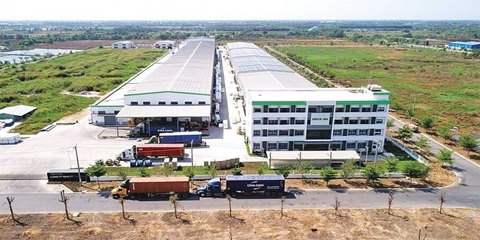
FOREIGN INVESTORS SEEKING A SYNCHRONISED MANUFACTURING ECOSYSTEM
Instead of focusing only on land costs and incentives as usual, foreign investors are seeking a synchronised manufacturing ecosystem, from stable power supply and logistics to shared infrastructure and the convenience of completing residence procedures for experts to serve their long-term investment in the country.
INFRASTRUCTURE / CONSTRUCTION / LOGISTIC / PORT
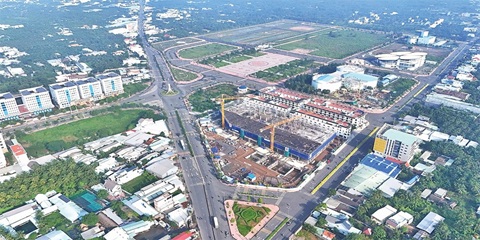
DONG THAP PROVINCE STEPS UP INDUSTRIAL EXPANSION AND INFRASTRUCTURE CONNECTIVITY
Accelerating public investment, strengthening inter-regional connectivity, and expanding industrial land are helping Dong Thap efficiently bolster competitiveness and drive economic growth. Following the 2025 merger of the former Dong Thap and Tien Giang provinces, the expanded Dong Thap province in the Mekong Delta faces mounting pressure to accelerate infrastructure development and strengthen connectivity among local economic zones, urban areas, industrial parks (IPs), and production centres.
PROPERTY / INDUSTRIAL ZONE
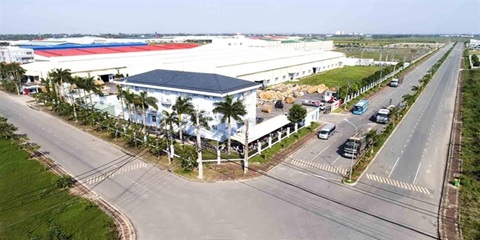
HCM CITY ATTRACTS US$5.7 BILLION INTO EXPORT PROCESSING AND INDUSTRIAL ZONES
HCM City attracted US$5.7 billion in domestic and foreign investment into its export processing and industrial zones during the first nine months of 2026. The figure exceeded the city's full-year target by 31 per cent, highlighting strong momentum in high-quality industrial investment under Resolution No.10-NQ/TW. Total investment reached 131 per cent of the 2026 target of $4.25 billion and represented a 29 per cent increase compared with the same period in 2025, according to the city's Export Processing and Industrial Zones Authority (HEPZA).

BANKING / FINANCE / INSURANCE / TAX
REMITTANCES TO HCM CITY RISE NEARLY 40% IN Q3
Remittances to HCM City reached more than US$2.83 billion in the third quarter of this year, up 39.5 per cent from the previous quarter and 3.6 per cent year-on-year. This was the first quarter showing positive annual growth this year, helping narrow the decline in remittance inflows over the first nine months. According to the State Bank of Vietnam (SBV)’s Regional Branch 2, remittances transferred to HCM City through credit institutions and economic organisations totalled $2.835 billion in Q3, an increase of more than $802 million from the previous quarter.
VIETNAM ECONOMY INVESTMENT
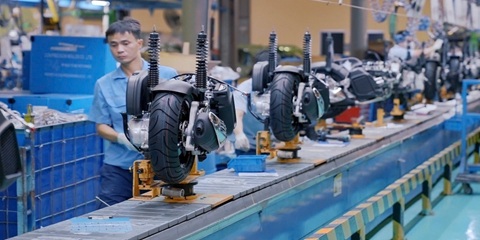
LOCALITIES REPORT BREAKTHROUGH RESULTS IN FDI IN FIRST NINE MONTHS
In Ho Chi Minh City, total registered capital reached $17.2 billion in the first nine months, up 4.2 times from the same period last year. The figure included more than $9.35 billion in newly registered capital and over $4.9 billion in additional capital for existing projects. Foreign investors also registered more than $2.9 billion through capital contributions and share purchases.

TECHNOLOGY
TECH SECTOR GROWTH OPENS UP OPPORTUNITIES FOR VIỆT NAM TO GO GLOBAL
The growth of the electronics, semiconductor and high-tech sectors worldwide is opening up a variety of opportunities for Vietnamese enterprises to integrate more deeply into the global supply chain. However, to become suppliers for these corporations, domestic enterprises must meet rigorous standards regarding quality, technology, productivity and order fulfilment capabilities.
Events Sponsors






















